
Dettaglio offerta - Bike in Umbria
Offerte
Pacchetti turistici

La Terra dei Santi
Un viaggio indimenticabile di 11 giorni attraverso Roma e l'Umbria, dove si intrecciano storia, spiritualità e bellezze naturali. Questo tour offre un legame profondo con i luoghi sacri dell'Italia e con i paesaggi sereni dell'Umbria, conosciuta come “la terra dei santi”.Un'esperienza straordinaria:Tesori antichi e siti spirituali di Roma: iniziate il vostro viaggio nella Città Eterna, esplorando luoghi simbolo come il Colosseo e il Vaticano. Sperimentate la profonda spiritualità di Roma con una visita alla Basilica di San Pietro e una visita guidata privata ai Musei Vaticani.L'eredità sacra di Assisi: immergetevi nella tranquilla bellezza di Assisi, la città natale di San Francesco. Visitate la Basilica di San Francesco, patrimonio mondiale dell'UNESCO, e seguite le orme di Santa Chiara. Questa giornata ad Assisi è un ritiro spirituale che offre momenti di riflessione e di connessione profonda. L'incanto dell'Umbria: Addentratevi in Umbria, una regione ricca di eredità di santi. Dalla Basilica di San Valentino a Terni alla serena città di Norcia, luogo di nascita di San Benedetto, ogni tappa offre un mix unico di storia e spiritualità.Pellegrinaggio a Santa Rita e San Benedetto: Visitate la città di Cascia, sede della Basilica di Santa Rita, patrona delle cause impossibili. Proseguite verso Norcia per onorare San Benedetto, i cui insegnamenti hanno gettato le basi del monachesimo occidentale.Ricchezze culturali di Perugia: Concludete il vostro tour a Perugia, dove gli strati di architettura etrusca, romana e medievale della città raccontano una storia di eredità culturale duratura. Godetevi le passeggiate guidate nel centro storico della città e assaporate i sapori della cucina tradizionale umbra.Questo tour non è solo un viaggio attraverso l'Italia, ma un pellegrinaggio nel cuore del suo patrimonio spirituale, che offre momenti di riflessione, immersione culturale e bellezza mozzafiato.
Condizioni contrattuali
60 giorni prima della data di arrivo. Le cancellazioni, con effetto dal ricevimento della comunicazione scritta, sono soggette alle seguenti penalità sull'intero prezzo del viaggio: Acconto non rimborsabile del 30% dovuto al momento della conferma 30-8 giorni prima della data di arrivo: penale del 50% 7 giorni o meno prima dell'arrivo: penale del 100%. Tutte le cancellazioni dovranno essere comunicate per iscritto e confermate da Taste e Slow Italy-Alessandra Galassi. Taste and Slow Italy-Alessandra Galassi non sarà responsabile per cancellazioni non confermate addebitando al cliente l'importo totale.
Cosa è incluso
• 3* or 4* Hotels in b&b treatment in standard double rooms• Private bus during the tour• Private tours and native expert Guides• Tour Escort for 10 days• Local guides • Earphones when necessary• Reservation and entrance tickets • Meals when specified in the plan, one light lunch with Montefalco DOCG wine and extravirgin olive oil tasting.• 2 lunches and 10 dinners
Cosa non è incluso
• Everything not mentioned in “the tour includes”• Flight tickets• Tourist accommodation taxes (approximately 3 € per person per night depending on the location)• Medical-luggage and cancelation insurance• Optional tours/experiences
Sistemazione Gruppi
Guide multilingua
Agenzia viaggio TASTE AND SLOW ITALY
Itinerario di viaggio
Breakfast and transfer to the airport. Transfer towards Airport: take a taxi or van to pay on the spot. Optional private transfer reservation, quotation on demand. (comfortable bus for groups) END OF OUR SERVICES. GRAZIE & ARRIVEDERCI
Morning arrival at Rome Fiumicino Airport. Transfer towards Rome: take a taxi van pay on the spot. This is the most efficient solution to manage the arrival from different cities and different flights. Optional private transfer reservation, quotation on demand. Check in at your accommodation 3 stars Hotel Relais dei Papi or same level (or hotel 4 stars on request). We will suggest your day activities depending on your arrival time Dinner in an authentic local Roman restaurant and overnight.
Breakfast and departure. Meeting with your local guide for a panoramic tour of Imperial Rome: Colosseum, Roman Forum, San Pietro in Vincoli (S. Pietro in Vincoli does not belong to the Imperial Rome but it is very closed to Nero's Domus Aurea. Inside you will admire the great Mosè by Michelangelo, a work of incomparable beauty). The Colosseo or Anfiteatro Flavio is biggest amphitheater of the Roman world, it was erected on the site of an artificial lake. Begun in the year 72 AD, it was completed eight years later. The amphitheater has a diameter of 620 feet in its widest section and 490 feet in its narrowest. During its inauguration, which lasted for a hundred days five thousand wild animals were slaughtered. Animal entertainments formed a part of the games and normally took place in the morning, till noon. Executions were another common feature of the Roman games. They took place at midday as an interlude between the animal in the morning sessions ant the gladiatorial combat in the afternoon. Although the executions were seen as symbolizing Rome’s and Emperor’s powers the senators and the higher classes, who have the best seats for the show, normally took advantage of the interval to live the arena to dine. The executions of deserters, prisoners-pf-war-, criminals from the lower classes, first Christians, were crucifixions or damnationes ad bestias, in which they would fight, with their hands, face to face with wild animals. Shows were always free, with pre-assigned day and seat inside the theatre. The Roman Forum was the political, commercial, and religious center of ancient Rome. The project was made in the valley between the Palatine and the Capitol hills, not far from the Aventine hill and the river Tiber. The VIA SACRA, which traverse the Forum from north-west to south-east, was the main street used for impressive military parades. The Temples, the arches, the Basilicas inside the Forum were constructed over the course of 900 years. Lunch at leisure Take your time in the afternoon for shopping. There are many designated shopping areas in Rome: around Piazza di Spagna, via del Corso, Galleria Alberto Sordi, La Rinascente, via Condotti, via del Babuino, via Ottaviano, via Candia, via Giulio Cesare (near the Vatican), or you can decide to visit a big shopping mall (1 hour from Rome). Dinner in a really unique restaurant. You can find there the real authentic Roman recipes. Transfer back to your hotel and overnight. ALTERNATIVE EXPERIENCE: THE VATICAN Breakfast and departure with your private bus towards S. Pietro and Vatican Museums. Meeting with your private Guide. Morning devoted to the visit of the Museums, Sistine Chapel with Michelangelo fresco and other artistic frescoes made by Raffaello, Pinturicchio, Perugino. Sistine Chapel and Vatican Museums. Our expert native guide will whisk you through the labyrinth-like corridors of the museum, taking you directly to the Sistine Chapel without delaying a moment. After the tour you can spend your day inside the Museums, leisurely wandering its magnificent galleries at your own pace, allowing you to focus on what interests you. With an expert guide who will bring Michelangelo’s artwork to life The collection of art and treasures, including paintings, carpets accumulated by the Popes along the centuries can be seen at the Vatican Museums. The buildings that house the Vatican Museums cover an area of almost 6 hectares. Their construction has been a work in progress since the 5th century. The restructuring work of the Museums started after the signing of the Lateran Treaty. Pius XI commissioned Giuseppe Momo to construct a monumental staircase and Luca Beltrami to design a new PINACOTECA. Only parts of the Museums are open to visitors. The Sistine Chapel was completed in 1484 for Pope Sixtus IV, Sixtus IV commissioned to the best Tuscan and Umbrian painters to decorate the walls with frescoes. Michelangelo's "The Last Judgment" was the last of the chapel's decorations to be carried out. What's Included • Expert, English-speaking tour guide • Entrance Tickets and Reservation Fees Sites Visited • Sistine Chapel • Vatican Museums Lunch at leisure Afternoon guided tour of Piazza Venezia, Trevi Fountain and Quirinale Palace. Enjoy a private tour of the squares of Rome, starting from piazza Navona. We start a walking tour with PIAZZA NAVONA, that still preserves the shape of the Stadium of Domitian, built at the end of 1st century A.D. The central fountain of the Four Rivers was made by Bernini in 1651. From the low basin rises a rock, pierced in the middle, on which are arranged the figures of four rivers also symbolizing four continents: the Danube, the Ganges, the Nile, and Rio de la Plata. Just a few block away, there is the oldest monument in central Rome, the Pantheon. This monument was built by Hadrian in 120 AD. The temple dedicated to all gods (pan theon), had already been erected by Agrippa between 27 and 25 B.C. on the same site and in 609 it was converted into a Church, the first temple in Rome to be Christianized. The original temple was built to commemorate the victory over Antony and Cleopatra at Actium. The interior is circular and measures 43,3 meters in diameter and in height. Along the walls, are a series of rectangular and semi-circular niches. Recent investigations have allowed scholars to determine how great was the technical skill required to build it. The temple rests on a heavy foundation wall, in the shape of ring, made of concrete, covered with travertine blocks measuring some 4,5 by 7 meters. At the summit of the pediment the travertine yields to brick, while in the dome itself only light brick and light volcanic stones were used, so that this vast dome would weigh as little as possible. The use of light from the opening in the roof displays the genius of the architect. Inside, the second chapel houses the tomb of Vittorio Emanuele II, first king of Italy. The third edicola is the tomb of Raphael. Your nice stroll in town is almost at the end. Few minutes ahead and you are in front of Trevi Fountain. The custom is to throw a coin into the water, over your left shoulder while facing away, to ensure you return in Rome. Toss a second coin and you’ll fall in love with an Italian. After the fountain, you will end the walking tour by the Spanish steps (in Italian Piazza di Spagna). The tour last about 2 hours, and you can take a break whenever you wish. Back to your hotel and relax Dinner in a local typical Restaurant in Rome
Breakfast at the hotel. Soon after an early breakfast be ready to attend the weekly Papal audience (we will reserve the entrance authorizations). At the end, (The Pope’s audience speech lasts about 1 hour 30 min) private guided tour of the Vatican Museums and St. Peter’s Basilica. Lunch at leisure. In the afternoon, private guided tour of San Giovanni in Laterano and Santa Maria Maggiore. Bernini's Piazza is a masterpiece. Laid out in the 17th century as a place for the Christians of the world to gather, the immense square is bounded by two semicircular colonnades, each of which is made up of four rows of Doric columns. In the centre of the piazza is an obelisk brought to Rome by Caligula from ancient Egypt. The dome of St.Peter's dominates the city and could once be seen from miles away. Its dimensions are so vast that there is room for several people at a time inside the ball above the lantern. Tour of the most important Basilicas in Rome. These churches are St. John in Lateran called the mother of all the churches; the Scala Santa; the Basilica of Santa Maria Maggiore dedicated to the Virgin Mary and the Basilica of St. Paul Outside the Walls – San Paolo Fuori le Mura. Private Guided Visit to Abbazia delle Tre Fontane, about 1h30. It represents one of the most important places in Christianity because the apostle Paul was beheaded here on 29 June 67. After the visit you can stop at the Monastic shop to buy the famous products prepared by the monks: bear, chocolate, honey, liqueurs, jams, oil, cosmetic and herbal products, cheeses, wines and legumes and also products made by local and Syrian Trappist sisters, religious objects and guides. To complete this itinerary dedicated to St. Paul, after the visit you leave to reach the Papal Basilica of San Paolo Fuori le Mura, 10 min far. Upon his death, Saint Paul was buried in this very place and his tomb immediately became an object of veneration: a memorial cell was built on top of it where, during centuries of persecution, the faithful and pilgrims went to pray. Emperor Constantine proclaimed freedom of worship in 313, putting an end to the persecution against Christianity, and had two Basilicas built over the tombs of Peter and Paul. Pope Sylvester consecrated that of San Paolo in around 330. After the Private Guided Visit, you can stop at the refreshment point before coming back to your accommodation. Dinner in a local typical Restaurant in Rome
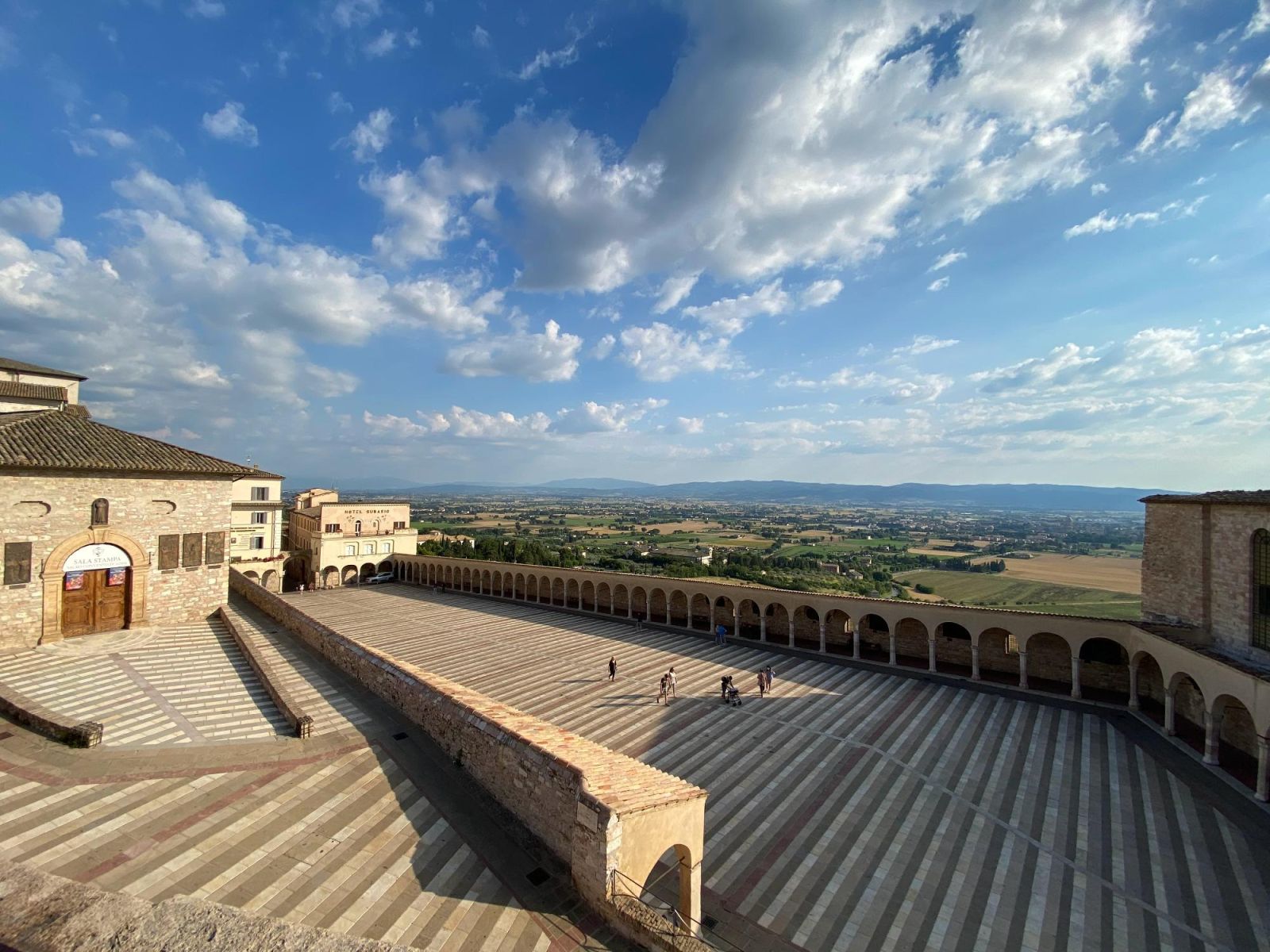
Breakfast and meeting with your driver Welcome in Umbria to live an enchanting journey through the heart of Italy, where history, spirituality, and natural beauty converge. Our itinerary takes you on a profound exploration of the lives and legacies of Umbria's most revered saints: Saint Valentine, Saint Francis, Saint Clare, Saint Rita, and Saint Benedict. This tour will guide you through picturesque towns and sacred sites, offering a unique opportunity to connect with the rich cultural and spiritual heritage of this remarkable region. Meet your driver and transfer to Umbria. Stop in Terni to visit San Valentine with your native Local Guide. Saint Valentine Our journey in Umbria begins in Terni, the hometown of Saint Valentine. Here, we'll visit the Basilica of Saint Valentine, where his relics are preserved. This charming town not only offers a spiritual experience but also celebrates the universal message of love that Saint Valentine embodies. Lunch in a nice local restaurant on the way to Assisi Saint Francis we head to Assisi, the birthplace of Saint Francis, one of the most beloved and influential saints in Christian history. The Basilica of Saint Francis, a UNESCO World Heritage site, is a masterpiece of medieval architecture and art. As we walk through the peaceful streets of Assisi, we will immerse ourselves in the humble and profound teachings of Saint Francis, whose message of simplicity and compassion continues to inspire millions. Saint Clare In Assisi, we also pay homage to Saint Clare, a close Sister in Christ of Saint Francis and the founder of the Order of Poor Clares. The Basilica of Saint Clare houses her tomb and the famous San Damiano Cross, which spoke to Saint Francis. Her life of devotion and service offers a poignant reminder of the strength and resilience of faith. Hotel check in Assisi and relax. Hotel La Terrazza 3 stars or same level (or hotel 4 stars on request). Meet your Local Guide for a nice walking tour; visit Assisi town centre, a perfect occasion to familiarize with this enchanting medieval village Dinner in a local typical Restaurant in Assisi
Today in Assisi you will live an unforgettable and unique experience. You will retrace the path that led Saint Francis and Saint Clare from the call of God to the choice of poverty and prayer, up to the total gift of their lives and the goal of holiness. You will be able to live a unique Spiritual Experience that will speak directly to your heart, thanks also to the precious testimony of those who still live the Franciscan charism today, the Friars Minor and the Poor Sisters of Santa Chiara. Your day begins with an early breakfast to allow you reaching the Eremo delle Carceri, 10 min trip, a hidden and reserved place on the slopes of Mount Subasio where Saint Francis loved to go and live in the first days after his conversion, seeking God and his will in silence and contemplation. If you prefer, you can chose to bring a pocket breakfast and have it under the trees surrounding the Eremo after the celebration. You will have the opportunity to participate at 7.30 AM in the Holy Mass with the Friars in the chapel of the hermitage, an experience of prayer in the silence of the dawning day. At 9.00, a friar will guide you in a special visit of the place, about 30 minutes. After the visit, you will leave for Convento S. Damiano, the famous place where Saint Francis heard the voice of Jesus speak to him through the Crucifix and say: "Francis, go and repair my house which as you can see is all in ruins”. The place that he restored with his bare hands and that became the first Monastery of the Poor Sisters, where St. Clare lived her whole life and died in peace after 40 years. A friar will welcome you and will guide you visiting the place, about 1 hour visit. If there is someone among you whose name is Clare, she will have the opportunity to write her name in the “Book of Clare”, a special book where the “Clare” of the worldwide visiting s. Damiano are collected. After the visit, you can take some time at leisure for personal prayer and to enjoy silence. Next stop will be down to the valley, where the Basilica of Santa Maria degli Angeli stands. In it the Porziuncola is kept, as if inside a treasure chest, the small church restored by Saint Francis where he lived with his first friars and where, in the night, he welcomed Sainte Clare, who fled from her father's house to be able to freely choose to donate her life to Jesus. Here Saint Francis cut her hair and accepted her consecration to God. Here St. Francis came back at the end of his life, after receiving the Sacred Stigmata of the Passion of Christ and here he died, lying on the bare ground, looking at the Sky. A friar will welcome you and will guide you visiting the place. 13:00 PM: Have lunch at one of the local restaurants to enjoy Umbrian cuisine. We recommend to reserve a menu based on specialties like "torta al testo" or dishes made with truffles. Afternoon is dedicated to the glory of St. Francis and St. Clare. From S.Maria degli Angeli you will reach in 15 minutes the Basilica of San Francesco in Assisi, one of the most important pilgrimage sites in the world. This basilica is divided into two parts: the Lower Basilica and the Upper Basilica. Lower Basilica: Admire the frescoes by Giotto and Cimabue, as well as the crypt with the tomb of Saint Francis. Upper Basilica: Appreciate the frescoes depicting the life of Saint Francis, also by Giotto. Visit duration: Approximately 1.5 hours. After the visit, you will reach the Basilica of Santa Chiara by foot, just a few minutes walk from the historic center. Here you can see the original crucifix that, according to tradition, spoke to Saint Francis. Visit duration: About 45 minutes. Optional: You will have the opportunity to participate at 18.45 PM in the celebration of Vespers in the chapel of the Crucifix inside the Basilica of Santa Chiara, where you can meet the cloistered community of Poor Sisters of Santa Chiara and join in their singing. A deep prayer experience not to be missed. Relax with an evening stroll through the streets of Assisi, perhaps stopping at a café for an aperitif. Dinner at a typical restaurant before concluding the day. Notes · Wear comfortable shoes, as you will be walking a lot. · Remind the dress code. · Bring a bottle of water and maybe a small snack to keep your energy up during the tour.
Meet your driver and transfer to Valnerina land. Stop in Cascia to visit Saint Rita with your native Local Guide. Saint Rita Our pilgrimage then takes us to Cascia, the home of Saint Rita, known as the patroness of impossible causes. The Basilica of Saint Rita is a significant place of pilgrimage, where visitors seek solace and miracles. Her extraordinary life of suffering, forgiveness, and unwavering faith provides powerful inspiration for overcoming life's challenges. Cascia is a particular sample of Sacred contemporary art monuments placed in the Monastery surroundings. transfer to Norcia and meet your Local Guide to discover Saint Benedict birthplace Lunch in a nice excellent restaurant in Norcia tasting the famous local black truffle and the unique Prosciutto (norcineria). After lunch Finally, we visit to Norcia, the birthplace of Saint Benedict, the father of Western monasticism and the patron saint of Europe. The Basilica of Saint Benedict, built over his birthplace, is a testament to his enduring influence. His Rule of Saint Benedict laid the foundation for monastic life in Europe and continues to guide communities worldwide. As we traverse the serene landscapes and historic towns of Umbria, this tour not only offers a deep spiritual experience but also a chance to appreciate the region's rich cultural tapestry. Each site we visit is a testament to the enduring legacy of these saints, whose lives and teachings continue to resonate through the ages. Join us on this pilgrimage to discover the timeless wisdom and grace of Umbria's holy figures. Dinner in a local typical Restaurant in Assisi
Breakfast at the Hotel and transfer to Perugia Meet your native Guide and enjoy a walking guided tour in town, it a rare case of city that preserves Etruscans, Romans and Medioeval walls. The heart of Perugia historical city center is Piazza Grande (now also known as Piazza IV Novembre). Piazza IV Novembre has been the center of civil and religious power in the city since it was established by the Etruscans. In the center of the square stands the impressive Fontana Maggiore, the city symbol and one of the finest Medieval fountains in Italy. It was completed in the late 13th century. A walk around the lower basin takes you past paneled scenes from the Old Testament, the story of the founding of Rome, an astrological calendar that appears to relate to local farming practices, and a representation of the seven arts. The 14th-century Palazzo dei Priori, leads off from the left of the fountain along the main street Corso Vannucci. The Basilica of San Lorenzo in Perugia is one of the city's main places of worship and historical monuments. It is a cathedral with a long history and many artistic and religious elements of interest. Here is a brief itinerary to discover the basilica and the Holy Ring Start your tour from Piazza IV Novembre, where the main facade of the Basilica of San Lorenzo is located. The facade is unfinished but presents an interesting contrast between the white and pink stone parts. Notice the architectural details and sculptures, including the Gothic portal and the windows. Enter the basilica and admire the Gothic architecture of the interior, with its high naves and elegant columns. The basilica contains numerous works of art, including frescoes, paintings, and sculptures. Don't miss: Chapel of the Holy Ring: located to the right of the main altar, this chapel houses the Holy Ring, an important reliquary. It is said that the ring is the one with which the Virgin Mary was married to Saint Joseph. It is kept in a precious case and venerated by the faithful. If required we can add in the plan the Holy Mass in Perugia Visit of the Rocca Paolina and Saint Peter’s church in Perugia. The fortress of Rocca Paolina in Perugia is a place that you absolutely should visit during your stay in Umbria. Rocca Paolina is a monumental fortress on a hill overlooking the center of Perugia. It was built around year 1540 by the will of Pope Paul III Farnese – that’s the origin of its name. The incredible thing of the Rocca is that it is not just a single building, but a sort of a city within the city. They had to build the fortress, but there was a preexisting neighborhood. Instead of demolishing the buildings, they decided to incorporate them into the fortress. They simply covered the streets with vaults of bricks and rocks. And now you can walk in an underground medieval town! Lunch at leisure. If you decide to taste something local, try a “PANINO CON LA PORCHETTA”. There is a kiosk, Granieri Porchetta, 300 feet from the main square: a panino con la porchetta (a sort sandwich with sliced pork) It is a must for me every time I visit Perugia city center. Visit Perugia at leisure and have an excellent coffee of aperitivo in one of the cafes of the city centre. Perugia has a strong artistic and cultural tradition. It was home in the 15th century to fresco painters Pietro Vannucci (nicknamed Perugino) and his pupils Pinturicchio. The Music Conservatory was founded in1788. The UNIVERSITA’ PER STRANIERI, established in 1925, attracts thousands of students from all over the world. The city hosts multiple annual festivals and events such as EUROCHOCOLATE FESTIVAL (October) and UMBRIA JAZZ FESTIVAL (July). The city is in fact the home of the best version of chocolate: BACIO, the mouth-watering chocolate-coated hazelnuts made in Perugia. Everyone in the world knows the Perugina chocolate factory (famous for the praline called Bacio), currently owned by “Nestlé”, one of the biggest global companies producing food products. Optional at leisure: MUSEUM NATIONAL GALLERY OF UMBRIA Entering the National Gallery of Umbria means leaving room for surprise. It means listening to the voice of time, appreciating the continuity between the artistic heritage produced over the centuries and the present we live in. The National Gallery of Umbria houses one of the richest art collections in Italy and is, at the same time, a treasure chest of the city's memory of Perugia. The works become milestones of a journey that starts from the 13th and reaches the 19th century, an unforgettable journey in the artistic and cultural history of Umbria and Italy. The works are exhibited on the upper floors of the Palazzo dei Priori in Perugia, seat of the Municipality since medieval times and the only Italian public building to house a large national museum. 3500 square meters of exhibition distributed in 40 rooms, a tower and a chapel, for an 800-year journey through the history of Italian art. Dinner in a local restaurant in Assisi
Breakfast at the Hotel. Around 8.30 depart to discover, two jewels of central Umbria, Bevagna and Spello at leisure. Along the road to reach Bevagna, right on the outskirts of Assisi, you cannot miss a short stop to visit the Sacred Hovel of Rivotorto. The building, today entrusted to the care of the Order of Friars Minor Conventuali, was created with the aim of preserving the structures of the Sacred Hovel, that is, the place where Saint Francis gathered his followers before obtaining possession of the Porziuncola. The interior, in addition to the suggestive view of the Hovel, is embellished with twelve 17th century canvases, painted by Cesare Sermei, which depict some episodes of the life of Saint Francis during the period spent in Rivotorto. The Franciscan Sources (what the Friars have transmitted to us of the events linked to the life of Saint Francis) and more specifically in the Legend of the Three Companions (a biography elaborated by the friars Rufino, Leone and Angelo who tell the life of Francis as a growing conformation to Christ) tell us about the beginnings of the first Franciscan Fraternity right in the Hovel. Bevagna was an early Etruscan settlement. Around 80 BC it became a Roman municiupium (MEVANIA). There are important remains of a temple near the north gate, of a theatre into modern houses in via dell’Anfiteatro. The town has a complete ring of medieval stone walls that are said to be close, if not identical with the Roman walls. Around the year 1000, it was a free “comune”. In 1152 Frederick Barbarossa set it on fire. The TRINCI family ruled here from 1371 to 1439. Later it was included in the Papal State, till the unification of Italy, in 1870. The legendary account of Francis of Assisi preaching to the birds took place outside the village. The stone on which he allegedly stood when preaching to the birds is now inside the Ciccoli Chapel of the Church of St.Francis. Beside the history and the artistic beauties, Bevagna is well known for its dishes and typical products: Honey, Extravirgin Olive oil, the Sagrantino DOCG wine, Porchetta and Truffle. A must is (even) just enter one of the butcher or grocery shops in town. Light lunch in an exclusive wine cellar. The farmer Roberto will guide you to discover the best local excellent wines: Sagrantino DOCG monocultivar, Grechetto DOC and Montefalco Rosso DOCG. They were the first cellars licensed as Enoturismo, a cellar where the guest can have an excellent guided wine tasting. Then, with some 20 miles drive you will reach Spello. Spello (ancient Hispellum) is an ancient free commune of Umbria, on the lower flank of Mont Subasio. The old, walled town lies on sloping ridge, that eventually meets the plain. From the top of the ridge, Spello commands a good view of the Umbrian plain towards Perugia, like a backstage; at the bottom of the ridge, the town spills out of its walls into a small and more modern section (by the locals called BORGO). The streets within the walls, retains its medieval aspect; the town is included in ring of medieval walls, built on previous walls of the Roman foundations, including three Roman Late Antique Gates (Porta di Augusto, Porta di Venere and Porta Consolare). Among the many churches, the more interested are Santa Maria Maggiore, built over a pagan Temple dedicated to Vesta, S. Andrea, with an altarpiece of Pinturicchio, S. Lorenzo, S. Claudio, that it is said to have been built on the remains of an early Christian cemetery. Other sites of interest are the “Old Town Hall” (1270), Palazzo dei Canonici, that houses the Pinacoteca Civica (Town’s Art Gallery), Palazzo Baglioni and Palazzo Cruciali. Spello is a beautiful and colorful village, known above all for its alleys covered with fragrant flowers in particular in June. Nice “passeggiata” in the city center. I can suggest to visit two hidden places in Spello: The Galleria Luigi Proietti http://www.museonorberto.com/ a nice small art gallery in the main street of Spello, Via Cavour n. 61, with the masterpieces of the famous local artist Norberto (the real name is Luigi Proietti). His favorite subject are the local Franciscan friars and the countryside of Assisi. The artist Norberto is famous all over the world for its singular masterpieces. the Roman Villa in Spello: The Roman Villa in Spello is renowned for its well-preserved mosaics and historical significance. This site offers a glimpse into the luxurious life of ancient Rome. Admire intricate 2nd-century AD mosaics depicting geometric patterns, mythology, and daily life. Visit the courtyard and imagine the original garden layout with greenery and fountains. Address: Villa dei Mosaici, Via dell’Innamorati - villamosaicispello.it If interested we have to reserve in good advance The “Big Event” in Spello is “The Infiorate”, which take place every year on the Corpus Domini feast (always on the ninth Sunday after Easter, according with Christian calendar). It takes a whole night, when almost a thousand people work without stop to create imagines and carpets made of flowers, along the old town’s narrow streets. This is just the beginning of the feast, when the Blessed Sacrament is carried in procession by the local bishop, on Sunday morning. The result is a mile-long path of beautiful (and every year different) floral creations, with an explosion of colors and smell. Dinner in a local typical Restaurant in Assisi
Breakfast at the Hotel. Meet your driver and transfer to Gubbio Arrival in Gubbio and meet your Private Local Guide Visit to the Church of San Francesco This 13th-century church is dedicated to Saint Francis of Assisi, who had a strong connection with Gubbio. The interior features frescoes and artworks depicting the saint's life. Guided city tour Your local guide will take you through the medieval streets of Gubbio, sharing stories and anecdotes about the city. You'll visit points of interest such as the Palazzo Ducale, the Fontana dei Matti (where you can receive the unique "Fool's License"), and the charming streets and squares of the historic center. Gubbio is affectionately known as the "City of Fools" due to its quirky tradition tied to the Fontana dei Matti (Fountain of the Madmen). Legend says that anyone who runs around the fountain three times earns the title of "Matto di Gubbio" (Fool of Gubbio). To make it official, visitors can receive a "Madman's License" (Patente da Matto) as a unique original souvenir, available at tourist office – your Guide will inform you -. Visit to the Cathedral of Saints Mariano and Giacomo Located in a panoramic position, this 12th-century cathedral is famous for its impressive portal and beautiful interior frescoes. Lunch at leisure in one of the typical restaurants in Gubbio Visit to the Palazzo dei Consoli. Although not a church, this Gothic palace is a significant historical attraction. It houses the Civic Museum, which includes the Eugubine Tablets, an important testimony to the ancient history and religion of Gubbio. Visit to the Church of San Giovanni Battista. This 12th-century Romanesque church is known for its simple yet elegant facade and beautiful bell tower. The interior is equally fascinating with historical architectural elements. Visit to the Basilica of Sant'Ubaldo Take the cable car from the city center to reach Mount Ingino and visit the basilica dedicated to Gubbio's patron saint, Saint Ubaldo. Here you can see the saint's relics and the famous "Ceri di Gubbio" used in the renowned Corsa dei Ceri. Return to the city by cable car Dinner in a local typical Restaurant in Assisi
Breakfast hotel check out and transfer to Rome. On the way to Rome visit the enchanting Orvieto, probably one of the most important churchs in the world for its Gothic style architecture. Arrival in Orvieto and meet your local Guide Visit Orvieto Cathedral (Duomo di Orvieto) Start your visit with the majestic Orvieto Cathedral, one of the most beautiful Gothic cathedrals in Italy. Its facade is a masterpiece of sculpture and mosaic, with extraordinary attention to detail. Inside, admire the breathtaking frescoes by Luca Signorelli in the Chapel of San Brizio, depicting scenes of the Apocalypse and the Last Judgment. Don’t miss the central rose window, one of the cathedral's most recognizable symbols. Guided city tour, a walk through the historic center of Orvieto, sharing stories and anecdotes about the city. You'll visit the Palazzo del Popolo, an imposing medieval building used for city assemblies, and stroll through the medieval streets, discovering hidden corners and breathtaking views. The guide will also show you the ancient Etruscan walls and panoramic points offering splendid views of the surrounding countryside. This tour will give you a comprehensive insight into Orvieto’s rich history and culture. Pozzo di San Patrizio (St. Patrick's Well) End the tour with a visit to the famous Pozzo di San Patrizio. This extraordinary 16th-century well, designed by Antonio da Sangallo the Younger, is a marvel of Renaissance engineering. At 53 meters deep, the well has two separate helical staircases, allowing people to descend and ascend without ever meeting, an ingenious solution for transporting water with donkeys. The well was built to ensure the city's water supply in case of siege, and its internal architecture is as functional as it is fascinating. After visiting the well, you can take a relaxing stroll through Orvieto's historic center, exploring local craft shops or enjoying a coffee in one of the city's historic bars. You might also visit other points of interest such as the Torre del Moro for a panoramic view of the city or the Necropolis of the Crucifix of Tufo, an important Etruscan archaeological site. Lunch at leisure in Orvieto Arrival in Rome, hotel check in and time at leisure in the Eternal City Farewell dinner in a local typical Restaurant in Rome
Contatti


Indirizzo
Via Borghetto, 30A
(06022)
Fossato di Vico
PG
